
Titaura
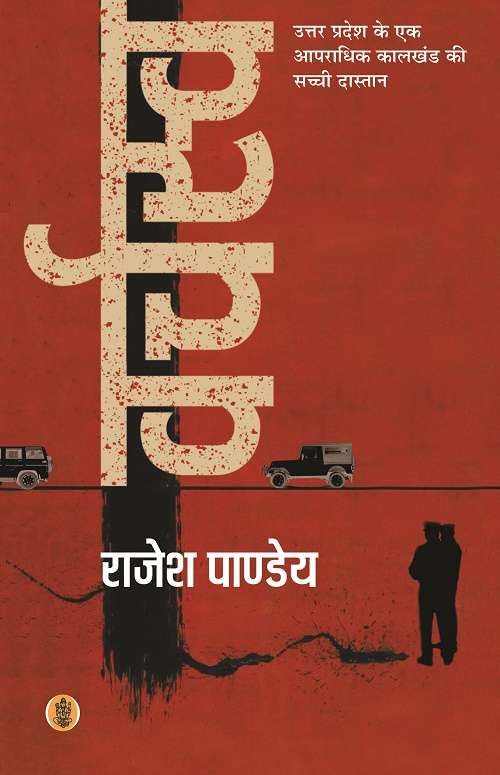

"Varchasva" is a Hindi-language non-fiction work by IPS officer Rajesh Pandey, who played a crucial role in policing and law enforcement in Uttar Pradesh. The book provides an insider's account of the intense battle between law enforcement and organized crime in 1990s Uttar Pradesh, with a special focus on the notorious gangster Shri Prakash Shukla. The narrative draws directly from the author's real-life experiences, making it a compelling true-crime chronicle.
The book centers on the rise and reign of Shri Prakash Shukla, whose criminal exploits in the 90s shocked society and altered the criminal-political landscape of Uttar Pradesh and Bihar.
Pandey illustrates how criminals gained direct political patronage and openly challenged law and order, using modern armaments such as the AK-47 to instill fear.
As a leading member of the Special Task Force (STF)—created specifically to curb organized crime and apprehend Shukla—Pandey details the operations, strategies, and harrowing risks faced by law enforcement.
The book captures the day-to-day realities, investigations, intelligence gathering, and psychological pressures encountered by police officers.
"Varchasva" provides deep insights into the mindsets and motivations of both criminals and police officers.
The narrative addresses not only the actions of gangsters, but the internal conflicts, societal expectations, and bureaucratic challenges faced by police officials.
The writing is vivid, tightly paced, and factual, immersing the reader in the gritty milieu of gang wars, political intrigues, and high-stakes police operations.
Rajesh Pandey assures readers that all the incidents recounted are authentic, based on public records, personal investigation, and direct experience—eschewing sensationalism for genuine reportage.
Personal anecdotes, especially those involving the emotional toll on Pandey’s own family, add a humanizing layer to the narrative.
Readers and critics describe "Varchasva" as unusually detailed compared to previous works on the same gangster, noting its comprehensive, fact-based approach to criminal history.
The book has been praised for its honest portrayal of the interplay between crime, politics, and law enforcement, as well as for its readability and depth. Some readers emphasize its educational value for understanding the criminalization of North Indian politics in the 90s.
The book does not shy away from exposing uncomfortable truths—such as the unchecked rise of criminal empires under political protection and the transformative effect the STF had on combating such crime.
A minor critique from some reviewers is that the heavy reliance on verified public events, while grounding the narrative in reality, can sometimes make the retelling feel more documentary than literary.
First-hand Account: Written by one of the key architects of Uttar Pradesh’s anti-crime task force.
Depth and Detail: Offers previously unreleased specifics of high-profile encounters and systemic challenges.
Unflinching Honesty: Neither glorifies criminals nor whitewashes the challenges, failures, and nuances of policing.
"Varchasva" is essential reading for those interested in true crime, law enforcement, and modern North Indian society. It combines the immediacy of lived experience with the objectivity of a senior police officer’s perspective, shedding light on a turbulent period that shaped contemporary law-and-order paradigms in India.
Note: The book is available in Hindi and published by Radhakrishna Prakashan. It consists of approximately 296 pages.